Skip to main content Skip to page footer
Pisava
OpenFOAM
Goals
Participants gain fundamental knowledge of computational fluid dynamics (CFD) and the basic principles of simulations in OpenFOAM.
They learn to generate high-quality computational meshes using the blockMesh and snappyHexMesh tools and understand the importance of improving the quality of these meshes. 
They acquire skills for correctly setting boundary and initial conditions, choosing appropriate algorithms (SIMPLE, PISO, PIMPLE), and assessing the stability of numerical calculations. 
They master techniques for processing results, validating simulations, and improving them, including the use of ParaView and gnuplot.
Share education
Details
28. - 30. september 2026
English
on premises in Maribor
2
15
750,00 €
Content

OpenFOAM® Basics training is intended for anyone who wants to gain the key skills to use this open source software and toolkit, which has become the first choice for computational simulations in the field of fluid dynamics (CFD), heat transfer and mass transfer. OpenFOAM® is widely used in various industries, thanks to its open source nature and capabilities that allow it to adapt to demanding engineering challenges.

In the course, you will be introduced to the basics of fluid mechanics and computational fluid dynamics (CFD), you will gain practical knowledge of generating computational meshes, setting boundary conditions and modeling turbulence. You will learn to use tools such as blockMesh and snappyHexMesh to create meshes, and perform laminar and turbulent simulations using advanced turbulence models (RANS, LES). In addition, there will be a strong emphasis on heat transfer simulations, multiphase flows and Lagrangian particle tracking.

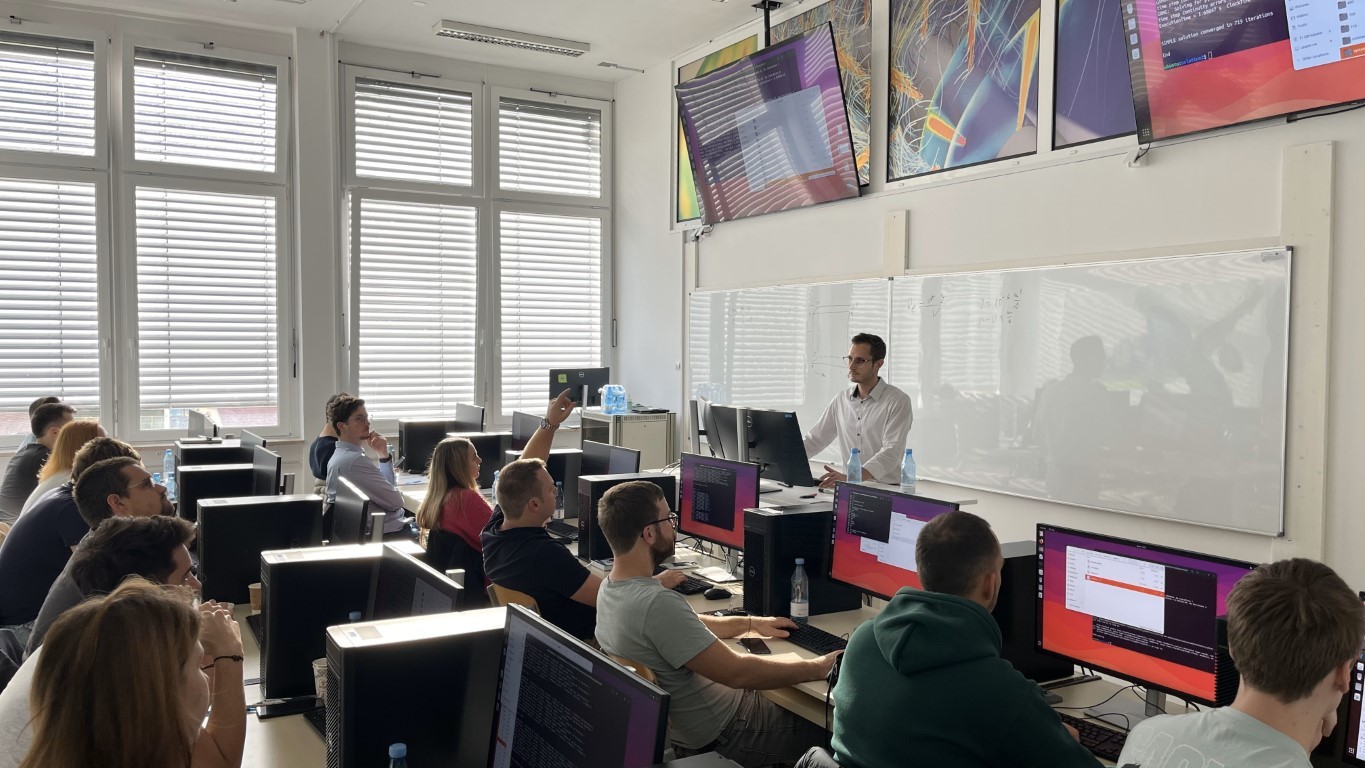
Participants will receive a digital copy of the course materials, which include lecture and exercise notes, along with additional video content that will allow you to deepen your knowledge after the course. The videos and materials are in English, which will help you expand your professional vocabulary and use the tool in an international environment.

In two intensive days, you will gain knowledge about using OpenFOAM for various simulations, including rotating-area flow modeling and parallel computing, through theoretical content and practical exercises, which will allow you to solve complex problems more efficiently.

Competence
  • Ability to create high-quality computational meshes using the blockMesh and snappyHexMesh tools and improve their quality.
  • Skill in selecting and setting appropriate boundary and initial conditions based on the physical properties of the problem.
  • Ability to use basic algorithms in OpenFOAM to achieve stable and accurate results.
  • Ability to analyze results such as residuals and drag coefficients and display them using ParaView and gnuplot.
  • Skill in validating and improving numerical results.
Schedule

Day

Time

Activity

1

09:00 - 17:00

  • Welcome.
  • Lecture on the basics of fluid mechanics, CFD and turbulence.
  • Introduction to OpenFOAM.
  • Mesh creation with blockMesh.
  • Laminar simulations.
  • Displaying results.

2

09:00 - 17:00

  • Turbulence models in OpenFOAM (RANS, LES).
  • Meshing with snappyHexMesh.
  • Parallel computing.
  • Heat transfer simulations.

3

09:00 – 17:00

  • Simulations of flows with rotating zones.
  • Simulations of multiphase flows.
  • Lagrangian particle tracking.


Provider

prof. dr. Jure Ravnik

is a recognized expert in the field of energy, process and environmental engineering and a full professor at the Faculty of Mechanical Engineering, University of Maribor. His research work covers a wide range of areas, such as multiphase and multicomponent fluid flows, turbulence, heat and mass transfer, and the development of numerical and approximation methods.

Dr. Ravnik has been active in numerous national and European research projects, where he has participated in simulations of fluid flows in various industrial processes, including paper production, research on the behavior of nanofluids, and the development of numerical algorithms for simulations in various applications. His work is crucial for progress in the field of modeling of transport phenomena and the use of numerical methods in industry.

In addition to his research work, Dr. Ravnik actively participates in professional committees, associations and societies, organizes scientific conferences and edits engineering journals. With his professional knowledge and extensive experience, he significantly contributes to the development of the academic and research community in the field of fluid dynamics and numerical simulations.

Other providers

dr. Jana Wedel

received her PhD from Friedrich-Alexander-Universität Erlangen-Nürnberg in Germany, where she is conducting collaborative research with the University of Maribor, Faculty of Mechanical Engineering. Her research focuses on the behavior of both rigid and deformable microparticles suspended in dilute multiphase flows. 

She has published numerous articles on topics such as aerosol transport and deposition in realistically modeled human lungs, dynamics and interactions of non-spherical particles (e.g. pollen, asbestos fibers), and shape and motion dynamics of soft deformable microparticles relevant for nanodrug delivery systems. Dr. Wedel started using OpenFOAM in 2014 during a dual study at automotive supplier Schaeffler Technologies in collaboration with Technische Hochschule Nürnberg, where she investigated cavitation and multiphase flows in rotating geometries with application to engine systems. In addition to her doctoral work, she teaches OpenFOAM-based numerical fluid dynamics courses for industry professionals in Germany and is also a faculty member at the Technische Hochschule Nürnberg, where she teaches master's students in numerical fluid dynamics using OpenFOAM.

Nejc Vovk
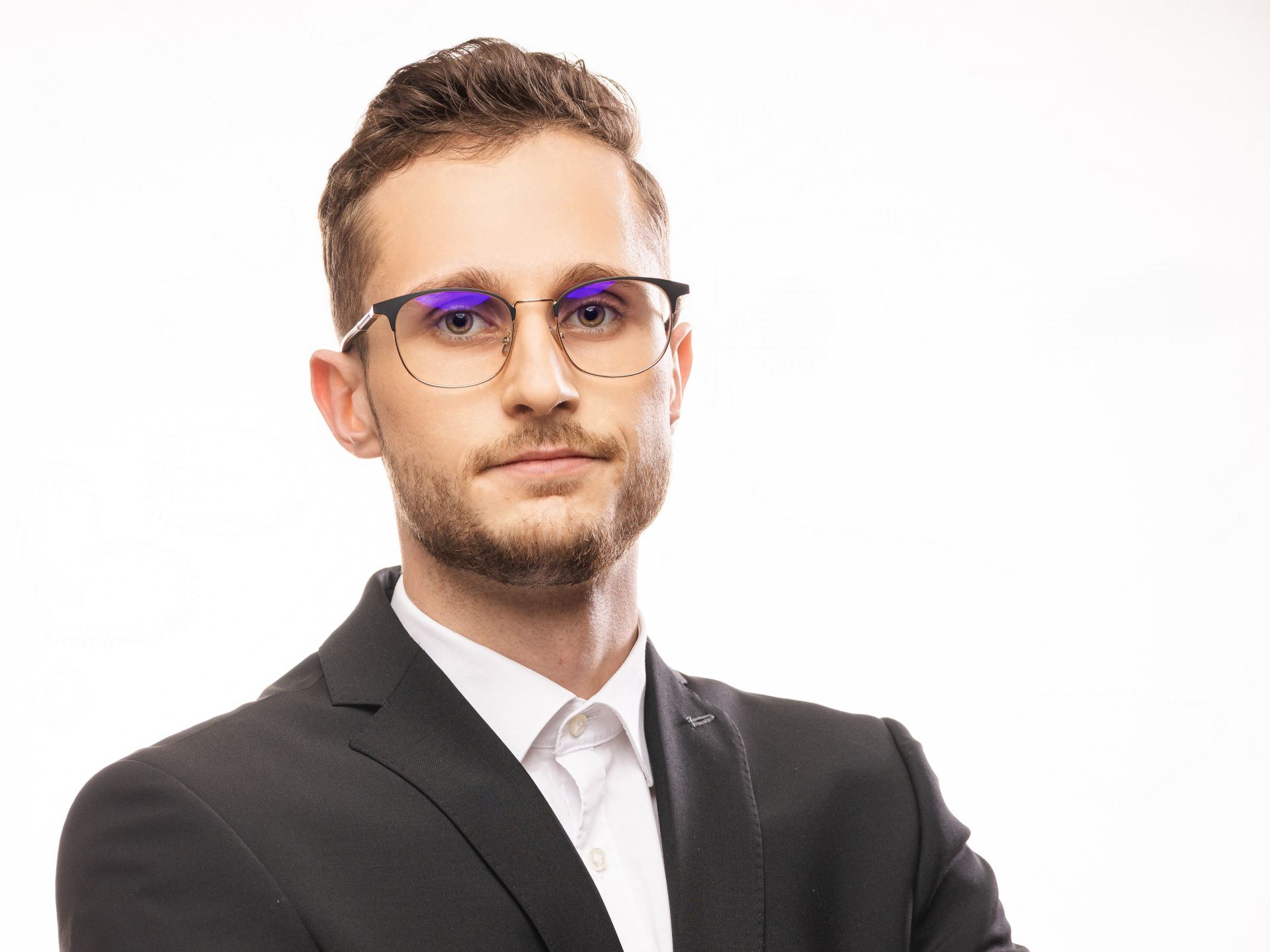
is a doctoral student at the Faculty of Mechanical Engineering, University of Maribor, specializing in numerical modeling of transport phenomena. His research focuses on multiphase flows with particles using the Euler-Lagrange approach, particularly nanofluid modeling for heat exchangers. A central aspect of his doctoral work is the development of AI-based submodels for drag forces in particle-laden flows, integrating traditional computational fluid dynamics (CFD) methods with advanced data-driven techniques.

Beyond academic research he contributes to industry-focused projects, among others including, water-hammer mitigation in pipelines, thermal analysis of domestic ovens, and computational modeling of complex aerodynamic systems for defense applications.